Remembering to drink water throughout the day is one of those things that sounds simple in theory but quietly slips through the cracks for a lot of people. If you find yourself reaching for a glass at the end of the day and realizing you've barely had any, you're in good company — and there are some genuinely easy ways to shift that pattern.
Why It Feels Harder Than It Should
Water doesn't come with the visual cue of hunger, the taste reward of a snack, or the ritual feel of morning coffee. It's easy to go hours without thinking about it, especially when you're focused on work, chasing kids, or just moving through a busy day. The good news is that building a water habit is less about willpower and more about making it easy for yourself — putting the right nudges in the right places.
Most strategies that actually stick aren't about discipline. They're about design: changing small things in your environment so that drinking water becomes the path of least resistance rather than one more thing to remember.
Start Your Day With a Glass
One of the easiest anchors you can add to your morning is a simple glass of water before anything else. Many people find that pairing it with an existing habit — like filling a glass while the coffee brews — helps it happen automatically without extra thought.
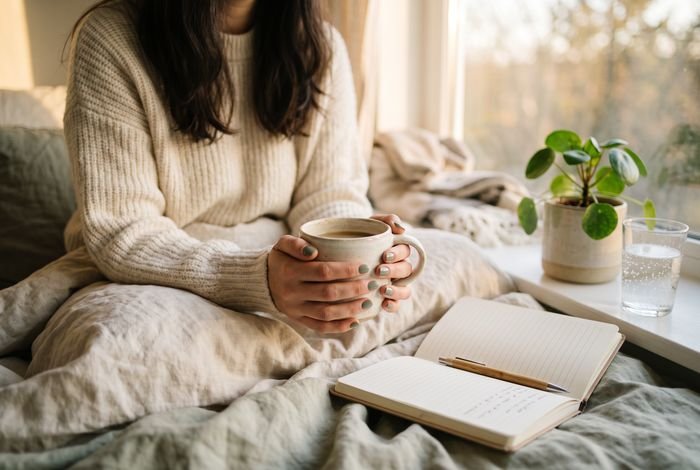
Keeping a glass on your nightstand or counter the night before can make this even simpler. When you wake up and the glass is already there, the friction to drink it is almost zero. It becomes part of the morning rhythm before you've even had a chance to get distracted.
If you're working on building a fuller morning routine, the ideas in how to create a morning routine you actually enjoy include simple anchoring strategies that work just as well for water as they do for other habits.
Try this
Set a glass of water out on your counter or nightstand every evening before bed. When you see it in the morning, drink it before you do anything else. One glass, zero decisions.
Use Visual Cues and Environmental Nudges
Out of sight really is out of mind when it comes to water. If your water bottle is tucked in a cabinet, you probably won't reach for it. If it's sitting on your desk, right in your line of sight, you'll naturally pick it up more often throughout the day.
Try placing water somewhere you already look regularly: your desk, the kitchen counter near the stove, the bathroom shelf, even your car cupholder. Each spot becomes its own quiet reminder without you having to actively think about it.
Some people also find it helpful to keep a small pitcher of water in the fridge at eye level. When you open the fridge for anything, there it is — ready to pour. It's a low-effort nudge that tends to work surprisingly well.
Making Your Water More Visible at Work
If you spend a lot of time at a desk, a large water bottle or carafe on the desk surface can make a real difference. When water is sitting right next to your keyboard, sipping during a pause or between tasks becomes almost automatic. Many people find they drink far more on days when their bottle is visible versus tucked away in a bag.
Link Water to Things You Already Do
Habit stacking — attaching a new behavior to something you already do reliably — is one of the most practical tools for building any routine. Water is a great candidate for this because it fits naturally around so many existing habits.
Some simple examples: drink a glass of water before every meal, have a sip every time you stand up from your desk, or drink water every time you wash your hands. These pairings work because the trigger (eating, standing, washing) already happens without effort, and water just rides along.
You might also try making water part of your evening wind-down. Many people overlook hydration in the evenings, but it can be a gentle way to close out the day. For more ideas on easy evening anchors, simple evening routine ideas to wind down has some good starting points.
Keep in mind
You don't need to overhaul your whole day at once. Pick one or two linking points that already feel natural in your routine and start there. Small, consistent wins add up faster than big efforts that don't last.
Make It Easier and More Enjoyable
Plain water can feel boring, and if something feels boring, it's harder to do consistently. The good news is that small tweaks can make a meaningful difference without adding complexity.
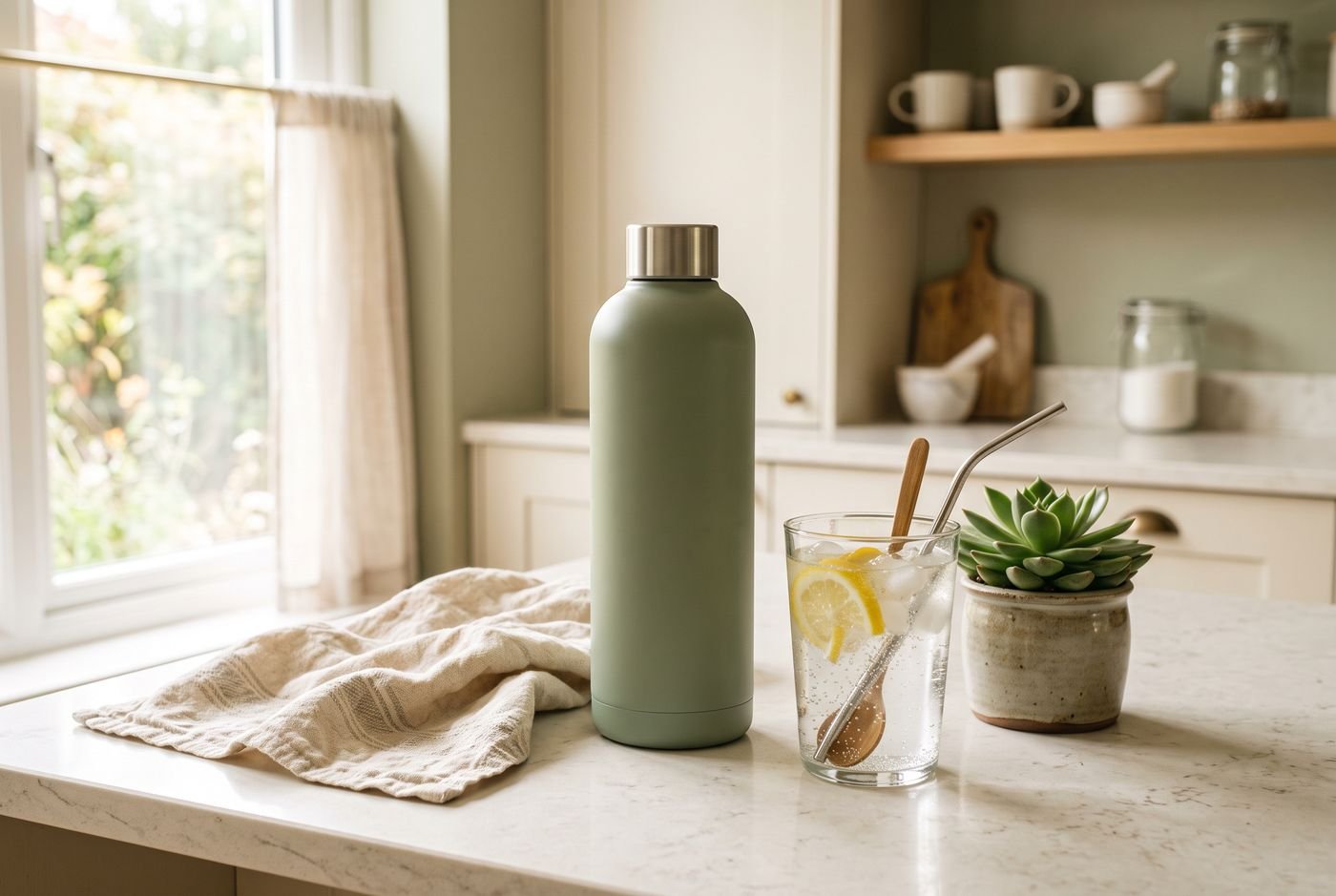
Adding fruit, cucumber slices, or fresh herbs to a pitcher of water can make it feel more like a treat than a chore. Cold water with a slice of lemon has a freshness to it that plain tap water sometimes doesn't. Sparkling water works for many people who find the bubbles more satisfying than still water.
The temperature matters too. Some people strongly prefer ice-cold water; others find room-temperature water easier to drink in larger amounts. There's no right answer — experimenting with what you actually enjoy will make the habit more sustainable than forcing something that feels like a task.
Choosing a Water Bottle That Motivates You
The container you use matters more than you might expect. A large bottle you love the look and feel of is much more likely to travel with you and stay in sight than a plain cup that gets left in a random spot. Look for a size that feels manageable (not so large it's intimidating), a design you enjoy, and a lid style that suits how you drink — some people prefer straws, others prefer flip-top openings.
If choosing the right bottle feels overwhelming, best water bottles for building a hydration routine walks through the key features to look for without overwhelming you with options.
Use Simple Reminders Without Relying on Apps
Apps and phone reminders can help, but they also get ignored over time once the novelty wears off. Physical or environmental reminders often work better in the long run because they don't depend on you noticing a notification amid everything else on your phone.
A sticky note on your monitor, a rubber band on your water bottle that you move after each refill, or a simple tally mark on a notepad can all serve as low-tech tracking that keeps you aware without adding screen time. Some people even use a dry-erase marker to write a goal number of glasses on their bathroom mirror — a small visual that greets them throughout the day.
If you're someone who enjoys tracking habits more formally, how to use a habit tracker to stay consistent offers some gentle approaches that don't turn into another chore to manage.
Try this
Put a rubber band or hair tie around your water bottle in the morning. Every time you finish and refill it, move the band to your wrist. At the end of the day, count how many are on your wrist. It's low-tech, oddly satisfying, and requires no charging.
This article covers general lifestyle ideas for building everyday habits. It is not medical advice. Individual hydration needs vary based on many factors including health conditions, medications, activity level, and climate. If you have questions about your specific needs, please speak with a qualified healthcare provider.
Build a Rhythm That Fits Your Life
There's no single "right" water schedule that works for everyone. A person who works from home, sits at a desk all day, and has a water bottle always within reach will have a very different rhythm than someone who is on their feet all day or in and out of meetings. The goal is to find the pattern that actually works for your life — not the one that sounds most impressive.
Start with just one or two of the ideas in this article rather than trying everything at once. Give yourself a week to see which ones feel natural and which feel forced. The ones that stick are the ones worth building on.
Free printable
Our Wellness Starter Pack includes a simple daily habit tracker — great for keeping an eye on your water intake alongside other small goals.
Get the Wellness Starter PackKeep Going — and Keep It Simple
Building a better water habit doesn't need to be a project. The simplest strategies — keeping water visible, pairing it with things you already do, and making it something you genuinely enjoy — are usually the ones that last. Start small, stay consistent, and adjust as you go.
If you're working on other healthy habits alongside this one, the healthy habits section has plenty of gentle, practical ideas to browse at your own pace.
Common questions
How much water should I be drinking each day?
General wellness guidance varies, and individual needs differ based on many factors including activity level, climate, and diet. Many people aim for around 8 cups a day as a rough starting point, but it's always a good idea to talk with your doctor about what's right for you personally.
Does coffee or tea count toward my daily water intake?
Many people wonder about this. Beverages like herbal tea and even regular coffee do contribute some fluid, though plain water is generally considered the most straightforward way to stay well-hydrated. If you enjoy tea or coffee, keeping a water bottle nearby alongside those drinks can be a helpful habit.
What if I genuinely don't like the taste of plain water?
You're not alone in that. Adding a slice of lemon, cucumber, or a few fresh mint leaves can make plain water feel more appealing without adding anything significant. Sparkling water is another option that many people find easier to enjoy consistently.
A quick reminder
Health & Wellness Talk shares general wellness and lifestyle ideas only. Nothing here is medical advice, and we're not a substitute for a qualified healthcare professional who knows your situation.