This article contains affiliate links. If you buy through one of them we may earn a small commission at no extra cost to you. How this works.
Walking is one of the simplest and most accessible movement habits there is. You don't need equipment, a membership, or any particular level of fitness to get started. What you do need is a bit of structure and a plan that makes it easy to show up on the days when you're tired, busy, or just not feeling it. This guide will help you build a daily walking habit that feels good from the very first week.
Why walking makes such a good daily habit
Walking has a few qualities that make it unusually easy to stick with compared to other forms of movement. It requires no warm-up, no cool-down, no class schedule, and no special location. You can do it from your front door, on your lunch break, or in the middle of a busy afternoon when you need to clear your head.
It's also adjustable. On a good day, you can go farther. On a hard day, a short stroll around the block still counts. This flexibility is part of why many people find walking easier to maintain as a long-term habit than activities that require more commitment or planning.
If you're looking for a broader set of ideas for moving more in your everyday life, the move and feel good section of this site has plenty to explore. But if you want to focus on walking specifically, let's start from the beginning.
Start smaller than you think you need to
One of the most common mistakes people make when starting a new movement habit is doing too much too soon. The first week feels great, so they walk for 45 minutes every day. Then life gets busy, they miss a few days, and the whole habit unravels.
A more reliable approach is to start small — deliberately smaller than you think you need to. If you could comfortably walk for 30 minutes, start with 15. If 15 feels easy, start with 10. The goal in the first two weeks isn't to build fitness; it's to build the habit of going at all.
Once walking at that length feels completely automatic — once you barely have to think about it — then you can start extending the time or adding a second walk. The habit comes first, everything else comes after.
Try this
Choose a walk length that feels almost too easy — maybe 10 minutes — and commit to it every day for two weeks without extending it. Notice how quickly it becomes something you just do without debating it with yourself.
Picking the right time of day
The single biggest factor in whether a walking habit sticks is whether you've chosen a time that actually works for your life. There's no universally best time — it depends entirely on your schedule, your energy patterns, and what else is competing for your attention.
Morning walks
Many people find that walking first thing in the morning means it gets done before the day has a chance to get in the way. It also doubles as a gentle way to wake up and shift into an alert, ready-to-move state. The downside is that mornings can be rushed, and early starts aren't for everyone.
Lunchtime walks
A walk during a lunch break is a natural fit for people who work at a desk all morning. It breaks up a long stretch of sitting, gives you a mental reset, and doesn't require getting up any earlier. Even 15 minutes outside can make the afternoon feel different.
Evening walks
For many people, an evening walk is a way to decompress and transition out of work mode. If you tend to feel more energized later in the day, this might be your natural window. The key is having a consistent trigger — after dinner, after you close your laptop, after the kids are in bed — so that the walk happens reliably rather than when you happen to remember it.
Making the walk automatic
The most reliable habit-building technique is to attach your walk to something that already happens every day. This is sometimes called habit stacking, and it removes the need to decide when to walk each day — it just happens after something else.
For example: "After I pour my morning coffee, I walk around the block." Or: "When I close my laptop for lunch, I put on my shoes and go." The specific trigger matters less than the consistency of the pairing.
Laying out your shoes the night before is another small trick that reduces friction in the morning. When the barrier to getting out the door is lower, you're more likely to go even on lower-motivation days.
Keep in mind
Your walking habit doesn't need to look the same every day. Some days you'll go for longer, some days you'll barely make it around the block, and both of those count. The goal is consistency over time, not a perfect record every single day.
Keeping your walks interesting
One of the quiet challenges with any daily habit is that it can start to feel repetitive. Here are a few ways to keep your walks feeling fresh without overcomplicating things.
Vary your route
Even small variations — going around the block in the other direction, turning down a street you don't usually take, or exploring a different neighborhood on weekends — can make the same amount of walking feel like something new.
Listen to something you enjoy
Saving a favorite podcast, audiobook, or playlist specifically for your walks is a simple way to make them something you look forward to. When the podcast is only available on your walk, the walk becomes the vehicle for something enjoyable.
Walk with someone
A walking buddy — a friend, a family member, or even a neighbor — makes showing up much easier. When someone else is expecting you, skipping feels harder. And the social element often makes the time pass faster.
Notice your surroundings
Some people find that leaving the headphones out occasionally and just paying attention to what's around them — the light, the sounds, what's changed since yesterday — makes the walk feel more grounding and refreshing.
Free printable
Track your daily walks with our simple habit tracker — part of the free Wellness Starter Pack.
Get the Wellness Starter PackA note on shoes and comfort
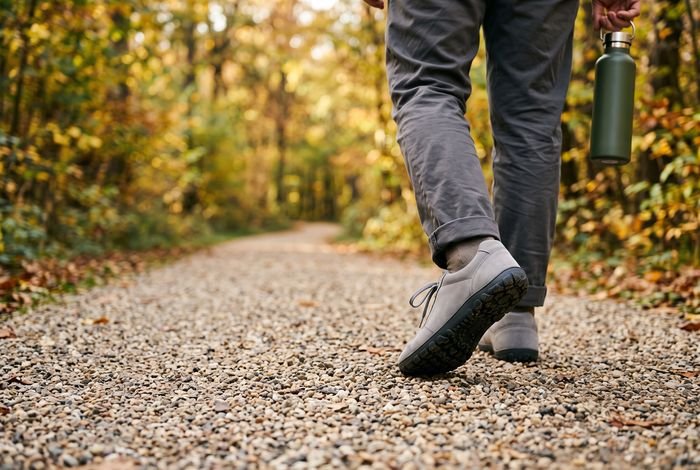
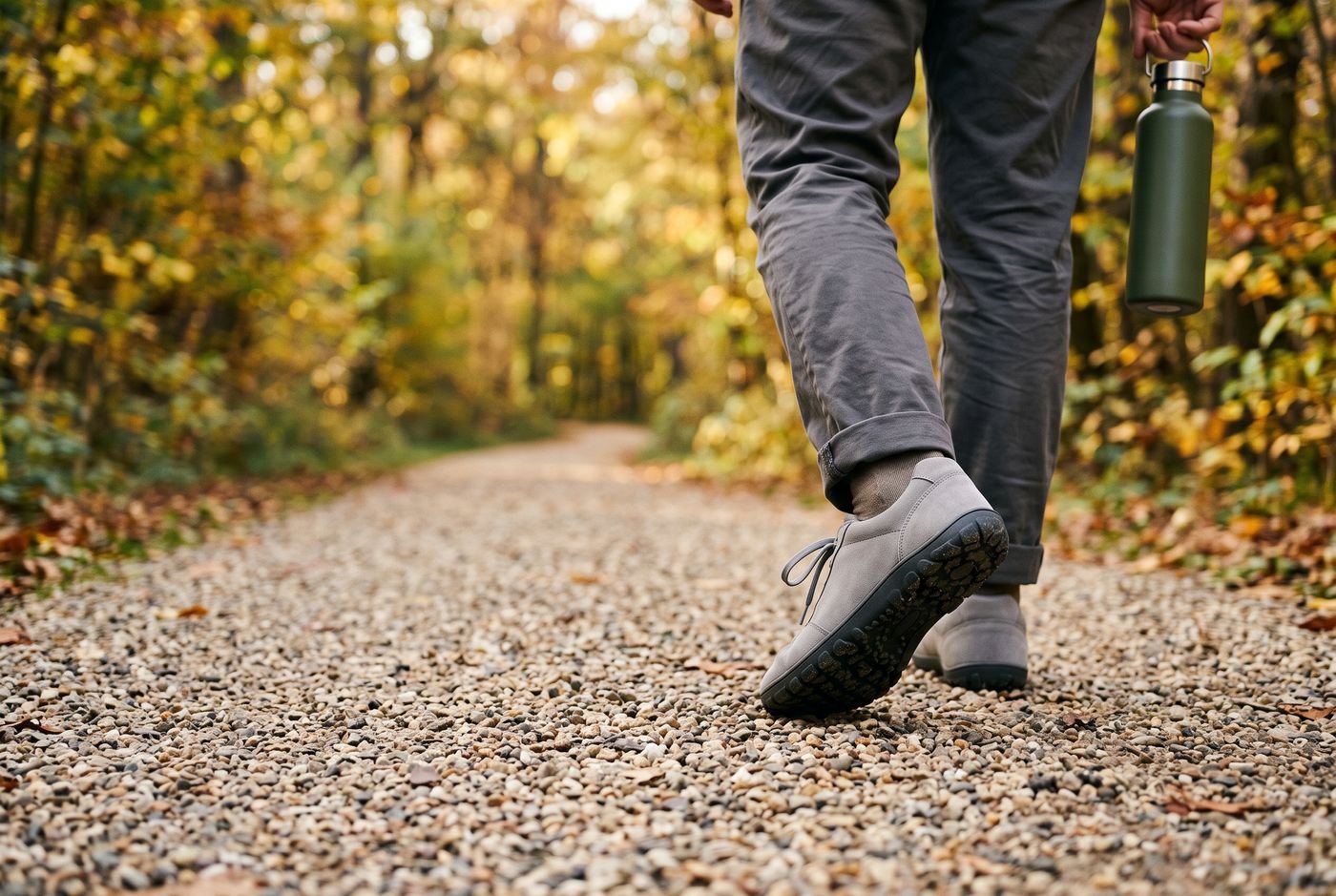
You don't need to spend a lot to walk comfortably, but the shoes you wear do matter — especially if you're planning to walk daily. A pair that doesn't fit well or doesn't offer enough support can make the whole experience less enjoyable, which makes it easier to find reasons not to go.
Look for shoes that feel comfortable from the first time you put them on (not shoes you have to "break in"), with enough cushioning for your usual surfaces and a fit that doesn't slip at the heel. If you're walking on pavement most of the time, a simple walking or running shoe works well for most people.
A cushioned pair of walking shoes
Well-cushioned walking shoes designed for daily use can make longer walks much more comfortable and reduce fatigue on harder surfaces. Look for good arch support, a breathable upper, and a flexible sole — and prioritize fit over style if you're choosing between the two.
See optionsTracking your progress
Keeping a simple record of your walks — even just a checkmark on a calendar — can be genuinely motivating. Seeing a streak of consistent days makes you more likely to protect it. Missing one day feels like a bigger deal (in a good way) when you can see the pattern you've built.
You don't need a fancy app or a fitness tracker. A printed habit tracker on your fridge works just as well. If you'd like to explore tracker options that go beyond walking, our guide to how to use a habit tracker to stay consistent covers several approaches.
If you have any physical conditions, joint concerns, or questions about how much walking is appropriate for you, it's worth talking with a qualified healthcare professional before significantly increasing your activity level.
What to do when you miss a day
Missing a day is inevitable, and it's not a sign that your habit is broken. What matters most is what you do the day after. The most helpful approach is simply to resume your normal walk without making it a big deal or trying to compensate by going longer than usual.
Missing two days in a row is where habits tend to wobble — not because of the missed days themselves, but because it's easy for "I'll go tomorrow" to become a new pattern. If you notice you've missed two days, treat the next walk as a fresh start, not a punishment.
Keep building on your habit
Once your daily walk feels natural and settled — something you do without much thought — you can start exploring ways to build on it. Maybe that means going a little farther, adding a second short walk, or trying different kinds of movement on days you're feeling more energetic.
For more ideas on moving more throughout your whole day, check out our list of 25 easy ways to add more movement to your day. And if you'd like to build your walking habit into a broader daily routine, our guide to creating a simple daily wellness routine is a natural next step.
You can also browse walking accessories and gear recommendations in the wellness finds section — helpful for when you're ready to invest in a little more comfort on your walks.
Common questions
How long should a beginner walk each day?
There's no single right answer — it depends on your current activity level and how your body feels. Many people find that starting with just 10 to 15 minutes a day is perfectly manageable, and you can gradually increase from there as it becomes a comfortable part of your routine.
Is it better to walk in the morning or evening?
The best time to walk is whichever time you'll actually do it consistently. Morning walks work well for people who like to start the day with some movement, while evening walks suit those who want to decompress after work. Try both and see what feels natural for your schedule.
What should I wear for daily walks?
Comfortable, supportive shoes are the most important thing. Beyond that, dress for the weather and wear whatever you're comfortable moving in. You don't need special gear to start — just shoes that fit well and feel good on your feet.
A quick reminder
Health & Wellness Talk shares general wellness and lifestyle ideas only. Nothing here is medical advice, and we're not a substitute for a qualified healthcare professional who knows your situation.